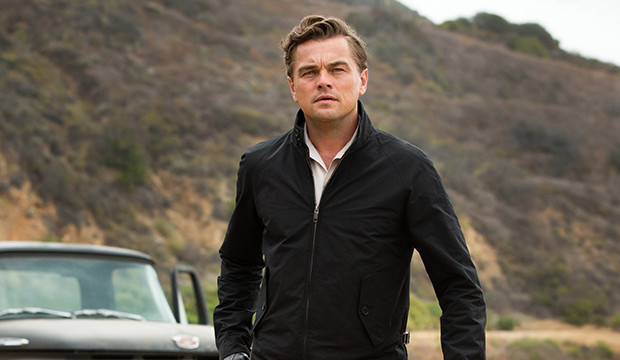
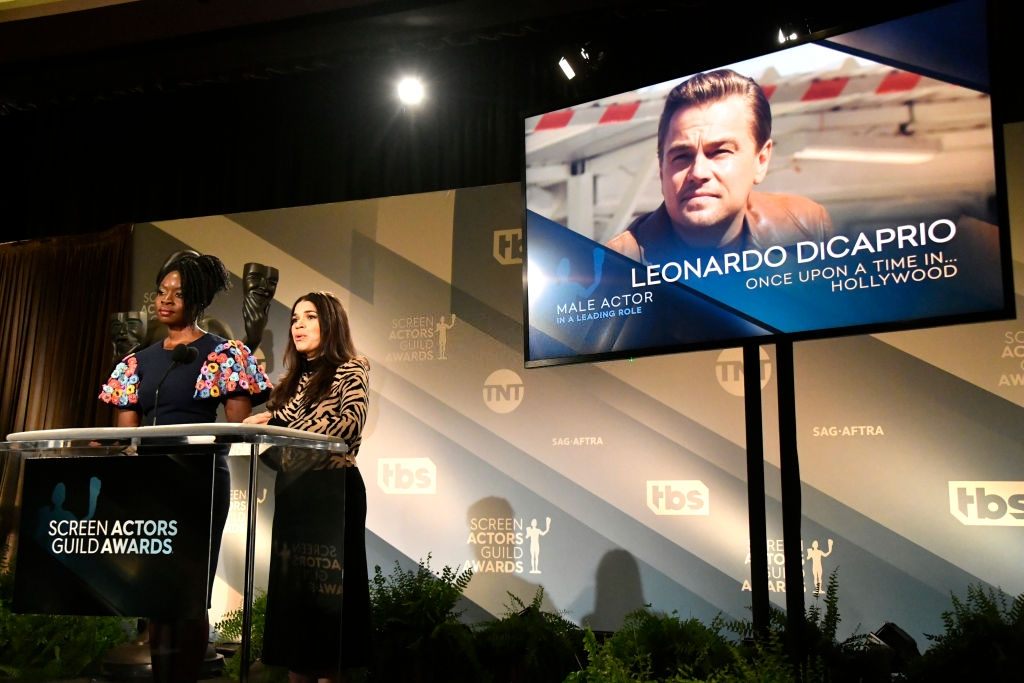
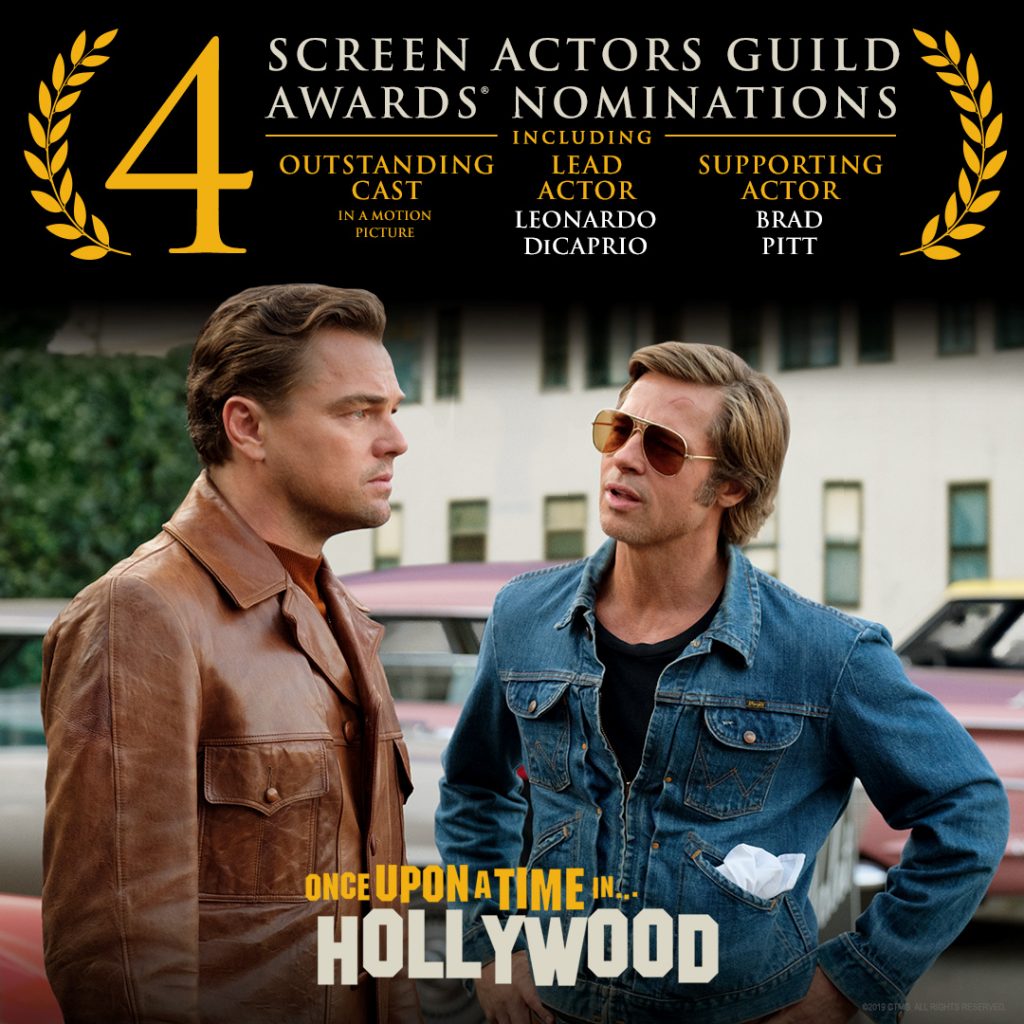
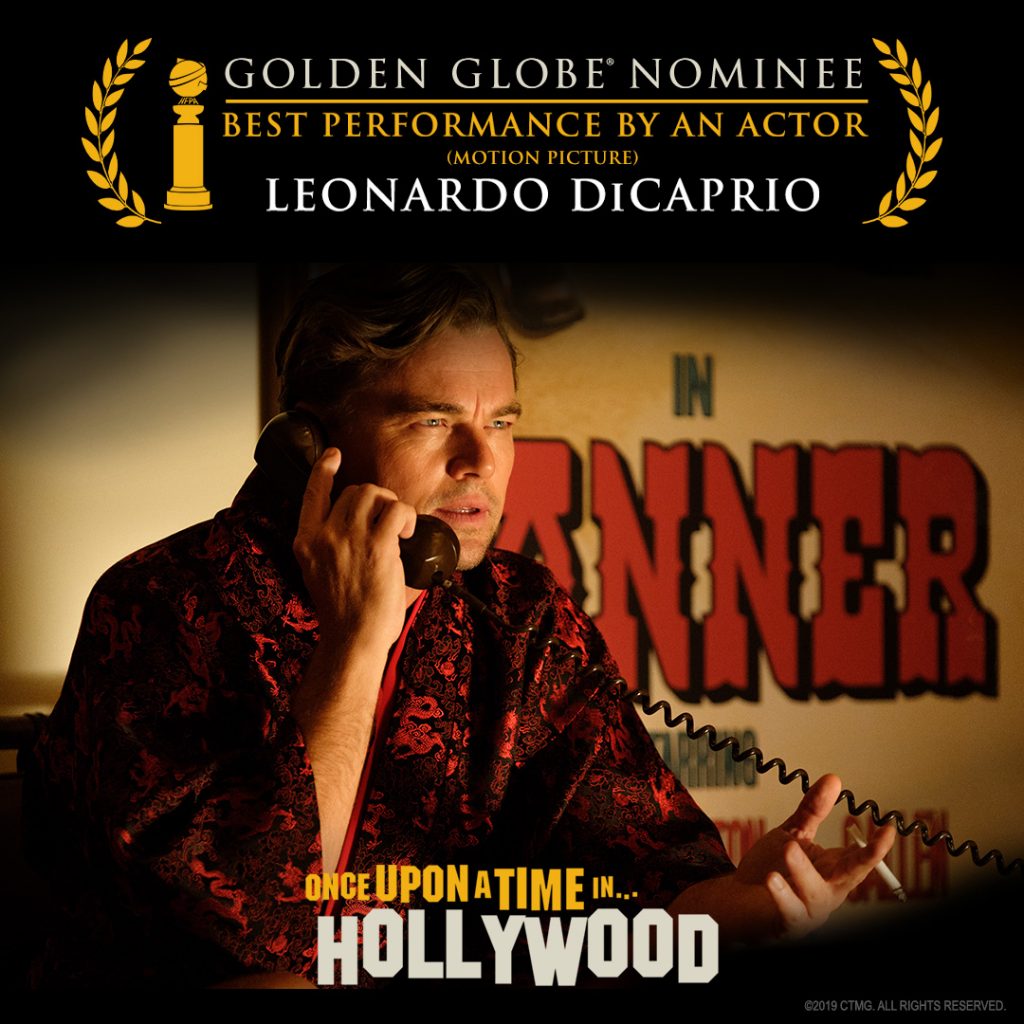
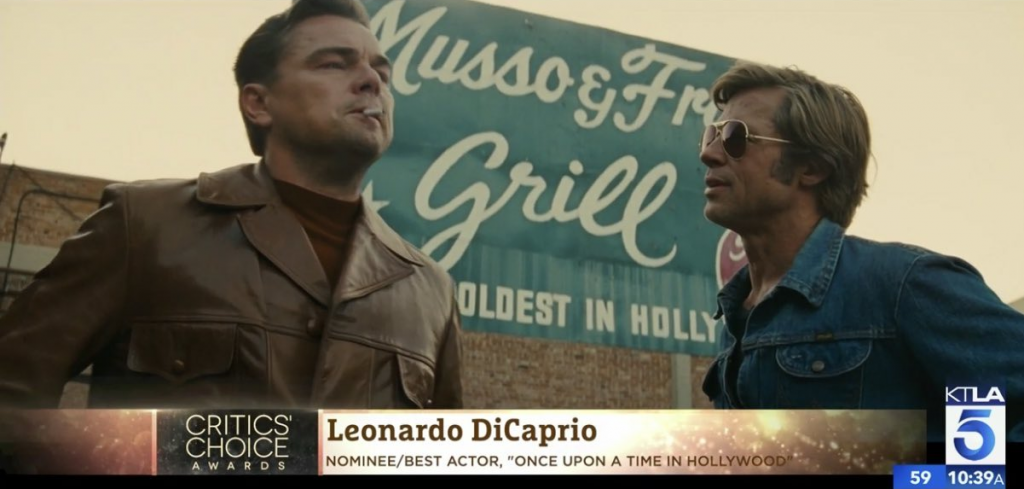
Asked to assess what it meant to get Leonardo DiCaprio for his first starring role since his Best Actor Oscar win for The Revenant, Quentin Tarantino is blunt: “He is one of the most if not the most talented actor of his generation, and the most naturally gifted actor I’ve ever worked with.”
DiCaprio doesn’t do many print interviews, but sparked to this opportunity because it was about the film and his, Tarantino’s and Pitt’s work that has put them in the center of the awards race. The 45-year-old who grew up in front of the camera to become arguably Hollywood’s biggest star, also wanted to discuss how movies are changing in the disruptive digital age.
DEADLINE: Quentin Tarantino had you come to his house to read this script. This was your first film since the ordeal of The Revenant. What made this the right return project, and how much did you give him when you finished?
LEONARDO DICAPRIO: Well, first off, I’m a huge fan of films about the industry. Something that was so finite and specific could only come from a mind of somebody that acutely is aware of cinematic history, and the cinematic culture in particular in Los Angeles. Who is celebrating a time period that is a transition from the ’60s into the great golden…not golden era, but the era of the director’s medium. I sensed that right off the bat. It was this celebration of what once was, through the perspective of these two guys, which I thought really clicked and really worked. The fact that he used two outsiders. It was almost like…I told him it was like Nick Carraway. It was like a Gatsby within and without. Within the industry, but they’re also completely detached and hanging on by a thread, and didn’t really belong anymore, which I loved. Two kinds of working-class guys that are…
DEADLINE: So, it’s like the opposite of the Howard Hughes you played in The Aviator…
DICAPRIO: Right. They’re watching as…this crystal castle next door exists and they don’t belong to it, and then Sharon Tate and all of the Hollywood elite are rolling through those gates. That’s the Hollywood they want to belong to, or at least Rick is desperately hoping to be a part of. Just that aspect coupled with his acute knowledge of…I was astounded by Quentin’s knowledge of television. I couldn’t believe that he knew all of the highlight episodes of Ralph Meeker, the actor that I cued into. We looked at a lot of different actors as a template for who Rick might be, from Edd Burns to Ty Hardin, and then I sort of…in watching all of this television and all of these B films, like The Guns of the Magnificent Seven. I’d watched a lot of different Westerns, but I started to delve into television because I was like OK, this is what happens to Rick afterward. I wanted to know about what Rick is doing now, and the fact that he belongs to this generation of actors that didn’t really study the craft. This guy came from the Midwest, hung out in Hollywood and tried to get a foot in the door, but didn’t try to necessarily elevate. And he’s pissed off at the industry that they don’t recognize his talent and his potential. That’s what this little girl sort of represents, and I thought it was his great celebration of our culture in Los Angeles, and cinema, and those people that never quite made that transition. I was really touched by the beauty of his relationship with this young, who is like, aren’t we lucky? Yeah, you didn’t make the Steve McQueen transition from television to movies, but nonetheless, aren’t we lucky to be working in this town? I really queued into that, and then of course the great relationship between Rick and Cliff.
Continue reading Leonardo DiCaprio On ‘Once Upon A Time In Hollywood’ And Looking For Positives In Disruption That Has Turned The Movie Business On Its Ear – The Deadline Q&A